

The German word Pappedeckel may look unusual to people learning German, especially those who encounter it in conversations, regional expressions or written texts. Its meaning is closely connected to cardboard, thick paper and everyday objects made from these materials. However, the word can also carry regional meanings that are not immediately obvious.
Understanding Pappedeckel requires looking at its spelling, pronunciation, grammatical structure and everyday usage. It is also useful to know how it differs from similar German words, such as Pappdeckel and Pappendeckel.
In this guide, you will learn what Pappedeckel means, how to translate it into English, where it is used and how to use related expressions correctly.
What Does Pappedeckel Mean?
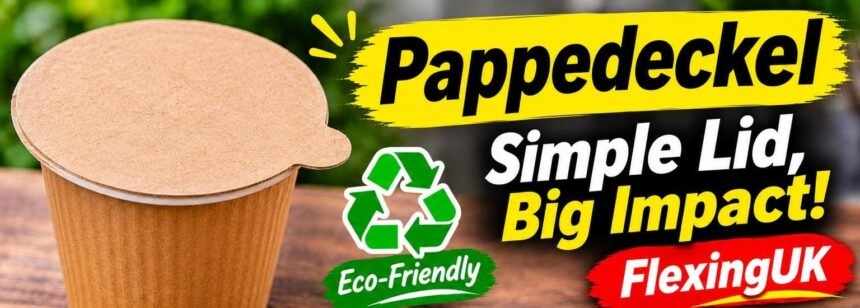
Pappedeckel is a regional German expression associated with cardboard or a piece of thick paperboard. Depending on the region and context, it can refer to cardboard material, a cardboard sheet or a cardboard-related object.
The more widely established dictionary forms are Pappdeckel and Pappendeckel. Both refer to a piece of cardboard or a material made from thick, pressed paper.
For example, someone might use a piece of cardboard to protect a surface, support an object or cover something temporarily. In certain regional varieties of German, Pappedeckel is a familiar way of referring to this material.
The word may also appear in regional speech with a figurative meaning. In some areas, it is associated with a driving licence or identification document.
Pappedeckel in English
The appropriate English translation depends on the context in which the German word appears.
| German expression | English translation |
|---|---|
| Pappedeckel | Cardboard |
| Pappdeckel | Cardboard or a piece of cardboard |
| Pappendeckel | Thick cardboard or paperboard |
| Ein Stück Pappe | A piece of cardboard |
| Pappkarton | Cardboard packaging or cardboard box |
| Führerschein | Driving licence (in a regional context) |
When translating Pappedeckel, it is important not to assume that every occurrence refers to a physical piece of cardboard. Regional context can change its intended meaning.
Is Pappedeckel the Correct German Spelling?
The spelling can be confusing because several closely related forms exist in German.
The standard dictionary headword is Pappdeckel, while Pappendeckel is also recognised as a related form. Pappedeckel appears as a regional spelling or dialect variant in some German-speaking areas.
These forms are closely connected in meaning, but they do not have exactly the same status in standard written German.
Consider the following comparison:
| Word | Spelling status | General meaning |
|---|---|---|
| Pappdeckel | Standard dictionary form | Cardboard or a cardboard piece |
| Pappendeckel | Recognised related form | Thick cardboard or cardboard material |
| Pappedeckel | Regional or dialectal variant | Cardboard; sometimes a regional figurative expression |
If you are writing a formal German document, using Pappdeckel is generally the safest choice when you mean a piece of cardboard.
However, if you are reproducing regional speech, writing dialogue or discussing a dialect expression, Pappedeckel may be appropriate.
Also Read: Assimilasjon: Meaning, Examples, Types, and Why It Matters
How Is Pappedeckel Used in Everyday German?
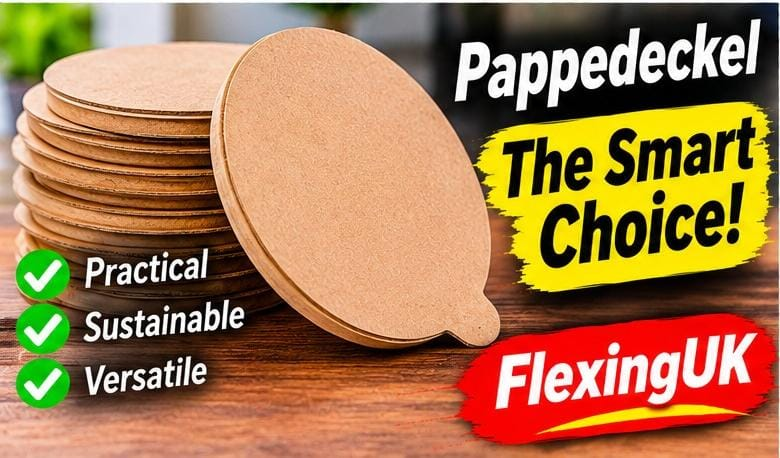
The word is associated with everyday materials and objects made from cardboard. Its exact use depends on the speaker’s region and the situation.
Here are some practical contexts in which the related standard forms can be used.
1. Cardboard for Packaging
Cardboard is commonly used to protect products during storage, transportation and delivery.
For example:
- Ein Stück Pappdeckel schützt die Oberfläche. (A piece of cardboard protects the surface.)
- Wir brauchen einen stabilen Pappdeckel für die Verpackung. (We need a sturdy piece of cardboard for the packaging.)
- Der Karton besteht aus mehreren Schichten Pappe. (The cardboard consists of several layers.)
2. Cardboard for Crafts and Projects
Thick cardboard is also useful for school projects, handmade decorations, models and other creative activities.
Examples include:
- Die Kinder basteln mit Pappe. (The children are making crafts with cardboard.)
- Für das Modell benötigen wir festen Karton. (We need thick cardboard for the model.)
- Ein Pappdeckel eignet sich als stabile Unterlage. (A piece of cardboard is suitable as a firm base.)
3. Cardboard in Everyday Household Activities
Cardboard can serve several practical purposes around the home.
For instance, a flat piece can be placed underneath an object to protect a table or used temporarily as a separator.
Example:
Leg bitte einen Pappdeckel unter die Pflanze.
Translation: Please put a piece of cardboard underneath the plant.
These examples use standard related vocabulary to demonstrate the meaning. They should not be interpreted as proof that Pappedeckel itself is the usual spelling in every German region.
Read more: Bropu: Meaning, Uses, and How to Understand This Unusual Term
Does Pappedeckel Have a Regional Meaning?
Yes. This is one of the more interesting aspects of the word.
In some German-speaking regions, particularly parts of southwestern Germany and neighbouring dialect areas, forms such as Pappedeckel and Pabbedeggel are associated with cardboard or a cardboard box.
However, regional usage can extend beyond the material itself.
In certain local expressions, the word can refer to a driving licence. This meaning is particularly important when interpreting informal conversations.
For example, a speaker might use a dialect expression involving Pappedeckel when talking about someone’s driving licence.
The context helps determine the intended meaning:
- Packaging context: The word refers to cardboard or a cardboard object.
- Driving context: It may refer informally to a driving licence.
- Regional conversation: Its meaning may depend on the local dialect.
Therefore, translating the word without considering the surrounding sentence can lead to misunderstandings.
What Is the Difference Between Pappe, Karton and Pappdeckel?
German has several words for cardboard and related materials. Although they are sometimes interchangeable, each word has a slightly different emphasis.
| German word | English meaning | Typical use |
|---|---|---|
| Pappe | Cardboard | General cardboard material |
| Karton | Cardboard or carton | Packaging and paperboard |
| Pappdeckel | Cardboard piece | A piece or sheet of cardboard |
| Pappendeckel | Thick cardboard | Cardboard material or a piece of it |
| Pappkarton | Cardboard box | Packaging container |
| Papier | Paper | General paper material |
Pappe
Pappe refers to cardboard as a material. It is commonly used when discussing the material itself rather than a particular object.
Example:
Die Schachtel besteht aus Pappe.
Translation: The box is made of cardboard.
Karton
Karton can refer to cardboard material, a carton or a cardboard container. Its meaning depends on the sentence.
Example:
Ich habe einen Karton für den Umzug gekauft.
Translation: I bought a cardboard box for the move.
Pappdeckel
Pappdeckel generally describes a piece of cardboard or a flat piece of thick paperboard.
Example:
Der Pappdeckel liegt auf dem Tisch.
Translation: The piece of cardboard is lying on the table.
Understanding these distinctions makes it easier to select the correct German word when speaking or writing.
Grammatical Information About Pappdeckel
For German learners, knowing the grammatical gender and plural form is just as important as understanding a word’s meaning.
The standard form Pappdeckel is a masculine noun.
Here are its basic grammatical details:
| Grammatical feature | Form |
|---|---|
| Noun | Pappdeckel |
| Gender | Masculine |
| Definite article | Der |
| Indefinite article | Ein |
| Genitive singular | Des Pappdeckels |
| Dative singular | Dem Pappdeckel |
| Accusative singular | Den Pappdeckel |
| Nominative plural | Die Pappdeckel |
| Dative plural | Den Pappdeckeln |
Example Sentences
Nominative:
Der Pappdeckel ist sehr stabil.
The cardboard piece is very sturdy.
Accusative:
Ich brauche einen Pappdeckel.
I need a piece of cardboard.
Dative:
Das Buch liegt auf dem Pappdeckel.
The book is lying on the piece of cardboard.
Genitive:
Die Stärke des Pappdeckels ist ausreichend.
The thickness of the cardboard piece is sufficient.
These examples demonstrate how the article and noun ending change according to the grammatical case.
Common Mistakes When Using Pappedeckel
People learning German can easily confuse Pappedeckel with other cardboard-related words. A few simple distinctions can help avoid these mistakes.
Mistake 1: Treating Every Spelling as Identical in Standard German
Although Pappedeckel, Pappdeckel and Pappendeckel are related, their spelling status differs.
Incorrect approach: Assuming Pappedeckel is the preferred spelling in every formal German sentence.
Better approach: Use Pappdeckel in standard writing when referring to a piece of cardboard, unless a regional spelling is specifically intended.
Mistake 2: Confusing Cardboard With a Cardboard Box
Pappe and Karton do not always describe the same thing.
For example:
- Pappe generally means cardboard material.
- Karton can mean cardboard or a cardboard container.
- Pappkarton specifically refers to a cardboard box or packaging container.
Choosing the appropriate word makes the sentence clearer.
Mistake 3: Ignoring Regional Context
A regional expression may have a different meaning from its standard dictionary equivalent.
If someone uses Pappedeckel while discussing a driving licence, translating it simply as cardboard may produce an incorrect interpretation.
Always examine the complete sentence before deciding on its meaning.
Mistake 4: Forgetting the Grammatical Gender
Pappdeckel is masculine.
The correct article is der Pappdeckel, not die Pappdeckel when referring to the singular noun.
Remembering the article makes it easier to construct grammatically correct sentences.
Frequently Asked Questions About Pappedeckel
1. What does Pappedeckel mean in English?
Pappedeckel generally refers to cardboard or a piece of thick paperboard in regional German usage. In certain local expressions, it can also refer to a driving licence.
2. Is Pappedeckel a German word?
Yes. Pappedeckel is a regional or dialectal German form associated with Pappdeckel and Pappendeckel. Its use varies across German-speaking regions.
3. What is the correct spelling: Pappedeckel or Pappdeckel?
Pappdeckel is the established standard dictionary form. Pappendeckel is also a recognised related form, while Pappedeckel is used regionally.
4. What is the plural of Pappdeckel?
The plural is Pappdeckel. The singular and plural have the same basic spelling, although the article changes.
For example:
- Singular: Der Pappdeckel
- Plural: Die Pappdeckel
5. Is Pappdeckel masculine or feminine?
Pappdeckel is masculine in German. Its correct definite article is der, so the singular form is der Pappdeckel.
6. Can Pappedeckel mean a driving licence?
Yes. In some regional German expressions, Pappedeckel or similar dialect forms can refer informally to a driving licence. The intended meaning depends on the region and conversational context.
7. What is the difference between Pappe and Karton?
Pappe generally describes cardboard material, while Karton can refer to cardboard, paperboard or a cardboard container. Both words are common in everyday German.
8. How do you pronounce Pappendeckel?
Pappendeckel is pronounced approximately as PAP-en-dek-el, with the main stress on the first syllable. Its phonetic transcription is /ˈpapn̩ˌdɛkl̩/.
Conclusion
Pappedeckel is an interesting regional German word with a meaning closely connected to cardboard and thick paperboard. Although Pappdeckel and Pappendeckel are the established dictionary forms, Pappedeckel also appears in regional speech and can have additional meanings, including an informal reference to a driving licence.
For German learners, the most important point is to understand the spelling differences, grammatical structure and regional context. Using Pappdeckel in standard writing and recognising Pappedeckel in local conversations will help you understand and use this vocabulary more accurately.
For more: Visit: FlexingUK