



Introduction
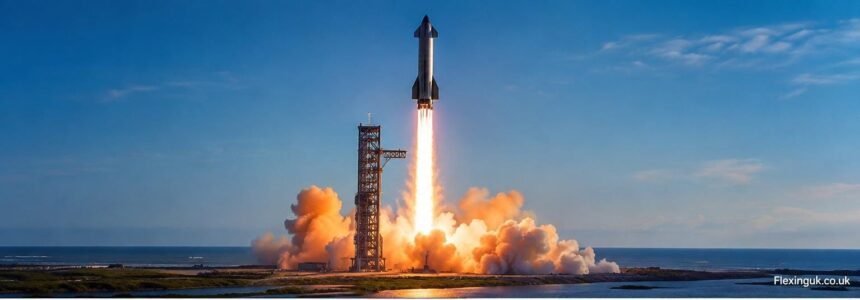
A SpaceX Starship launch represents one of the most ambitious attempts to redesign how humans and cargo travel beyond Earth. Unlike traditional rockets that are mostly used once, Starship is being developed as a fully reusable spacecraft system designed to transport people, satellites, scientific equipment, and supplies into space.
For many people searching for SpaceX Starship launch, the main questions are simple: How does Starship work? Why is SpaceX building such a large rocket? When will it carry humans? And how could it change the future of space exploration?
Starship is more than just a powerful rocket. It is an engineering project focused on creating a reusable space transportation system. SpaceX’s long-term vision includes supporting missions to the Moon, Mars, and other destinations, although many technical challenges still need to be solved before those goals become reality. Reuters
This guide explains everything about the Starship launch system, including its design, technology, flight tests, challenges, and future possibilities.
What Is SpaceX Starship?
SpaceX Starship is a next-generation spacecraft system developed by SpaceX. It is designed to carry large payloads and eventually humans beyond Earth orbit.
The complete launch system has two major parts:
| Component | Role |
|---|---|
| Starship spacecraft | The upper stage that carries cargo, crew, and equipment |
| Super Heavy booster | The powerful first stage that provides the initial thrust for launch |
Together, these vehicles form the Starship launch system.
The idea behind Starship is different from traditional rockets. Instead of building a new rocket for every mission, SpaceX aims to create a system where both major components can return, be maintained, and fly again.
Why Is the SpaceX Starship Launch Important?
The importance of the SpaceX Starship launch comes from its focus on reusability and large-scale space transportation.
Historically, rocket launches have been expensive because many rocket components are discarded after use. SpaceX previously demonstrated partial rocket reuse with the Falcon program, but Starship aims to take this concept further by making the entire launch system reusable.
Potential advantages include:
- Lower cost per mission
- More frequent space launches
- Larger cargo delivery capability
- Support for future Moon missions
- Possibility of long-duration exploration missions
A reusable spacecraft could allow space missions to operate more like commercial aviation, where vehicles are repeatedly used rather than replaced after every journey.
How Does a SpaceX Starship Launch Work?
A Starship mission involves multiple stages, from launch preparation to recovery.
1. Launch Preparation
Before a Starship launch, engineers perform extensive checks on:
- Rocket engines
- Fuel systems
- Flight computers
- Navigation equipment
- Communication systems
- Structural components
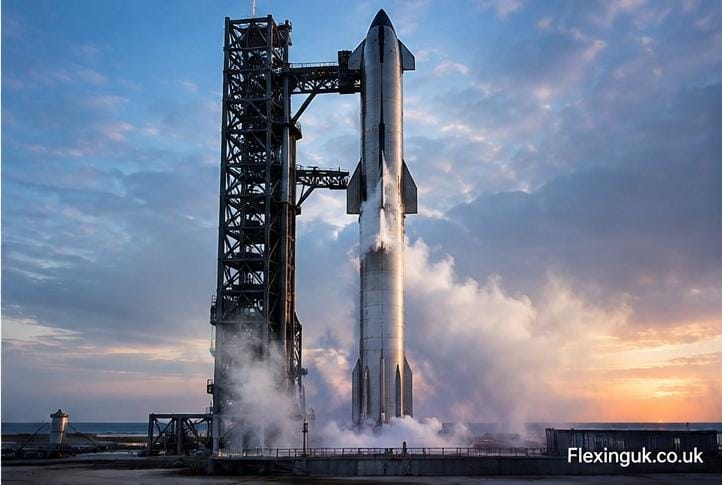
The vehicle is prepared at SpaceX’s Starbase facility in Texas, which serves as the main testing and launch location.
2. Liftoff Using Super Heavy Booster
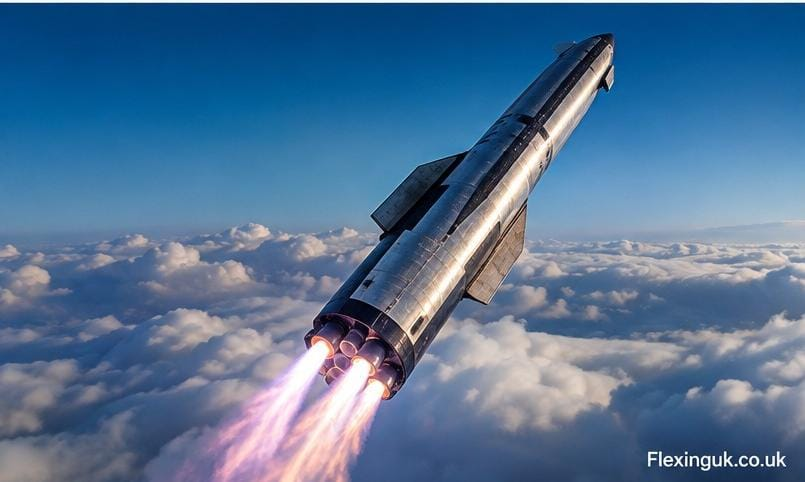
At launch, the Super Heavy booster provides the enormous thrust required to lift the vehicle from Earth.
The booster uses Raptor engines, which burn liquid methane and liquid oxygen.
The first stage must overcome:
- Earth’s gravity
- Atmospheric resistance
- The weight of fuel and spacecraft
The Super Heavy booster is designed to separate after completing its main role.
3. Starship Spacecraft Continues the Journey
After separation, the Starship spacecraft continues using its own engines.
Depending on the mission, Starship can be used for:
- Orbital flights
- Cargo transportation
- Satellite deployment
- Future crew missions
The spacecraft is designed with a large internal volume, allowing it to carry much larger payloads compared with many existing spacecraft.
4. Return and Recovery
One of Starship’s biggest goals is rapid reuse.
A successful reusable system requires:
- Controlled atmospheric reentry
- Heat protection
- Accurate landing systems
- Structural durability
During test flights, SpaceX collects data to improve vehicle performance and reliability. Future missions continue to evaluate recovery and reuse capabilities. Space
What Makes Starship Different From Other Rockets?
1. Full Reusability
Many rockets are partially reusable or expendable. Starship is designed around complete reuse.
The concept includes:
- Returning the Super Heavy booster
- Recovering the Starship spacecraft
- Refurbishing components
- Flying multiple missions
This approach could reduce manufacturing requirements for future launches.
2. Extremely Large Design
Starship is one of the largest rocket systems ever developed.
Its large size allows it to carry:
- Heavy scientific equipment
- Large satellites
- Space station supplies
- Lunar cargo
A larger spacecraft creates opportunities for missions that require moving significant amounts of material into space.
3. Methane-Powered Raptor Engines
Starship uses methane-based Raptor engines.
Methane is considered useful for future exploration because it may be possible to produce methane using resources available on Mars.
This makes methane attractive for long-term exploration concepts.
SpaceX Starship Launch Test Flights
SpaceX uses test flights to gradually improve Starship technology.
Each flight provides engineers with information about:
- Engine performance
- Vehicle stability
- Stage separation
- Heat shield performance
- Landing systems
Rocket development often requires multiple test flights because engineers must validate designs under real flight conditions.
Recent Starship testing has focused on improving reliability, increasing mission duration, and advancing toward more complete orbital capabilities. Reuters
Major Milestones in Starship Development
| Period | Development Stage |
|---|---|
| Early prototypes | Testing basic spacecraft design and flight systems |
| Initial flight tests | Evaluating launch, separation, and landing procedures |
| Later test missions | Improving reliability and recovery systems |
| Future missions | Demonstrating operational capabilities |
Each stage helps SpaceX gather engineering data before attempting more complex missions.
What Challenges Does Starship Face?
Building a giant reusable spacecraft is extremely difficult.
Heat During Atmospheric Reentry
When a spacecraft returns to Earth, friction with the atmosphere creates intense heat.
Starship uses heat shield technology designed to protect the spacecraft during this process.
Challenges include:
- Protecting thousands of heat shield tiles
- Managing extreme temperatures
- Maintaining vehicle strength
Engine Reliability
The Raptor engine must operate under extreme conditions.
Engine challenges include:
- High combustion pressure
- Extreme temperatures
- Repeated operation
A reusable rocket requires engines that can perform reliably across many missions.
Fuel Management
Long-distance missions require efficient fuel systems.
Future deep-space missions may require technologies such as:
- In-space refueling
- Improved storage methods
- Long-duration spacecraft operations
Safety and Regulation
Large rocket launches require careful safety evaluation.
Space agencies and aviation authorities review:
- Launch risks
- Environmental impact
- Public safety measures
SpaceX Starship and Moon Missions
Starship is expected to support future lunar exploration efforts.
One planned use is as a lunar landing system capable of transporting astronauts and equipment to the Moon.
Possible applications include:
- Scientific research
- Transporting supplies
- Supporting lunar infrastructure
- Delivering large equipment
NASA selected a Starship-based vehicle concept for its Artemis lunar exploration plans, although mission schedules depend on ongoing development and testing. Space
Could Starship Take Humans to Mars?
Mars exploration is one of SpaceX’s biggest long-term goals for Starship.
However, human Mars missions require solving many complex problems:
- Protecting astronauts from radiation
- Creating reliable life-support systems
- Producing fuel on Mars
- Supporting human health during long journeys
- Building sustainable habitats
Starship provides a possible transportation solution, but a Mars mission requires many additional technologies beyond the spacecraft itself.
Starship Compared With Traditional Rockets
| Feature | Starship | Traditional Rockets |
|---|---|---|
| Reusability | Designed for full reuse | Often partially reusable or expendable |
| Fuel | Methane and liquid oxygen | Different fuel combinations |
| Main purpose | Large-scale transportation | Individual missions |
| Payload capacity | Designed for very large payloads | Varies by rocket |
| Future goal | Moon and Mars exploration support | Mostly Earth orbit missions |
Why Reusable Rockets Matter for Space Exploration
Reusable spacecraft technology could influence the future of space activity.
Benefits may include:
More Frequent Missions
A reusable vehicle could reduce the time required between launches.
Lower Manufacturing Needs
Instead of building a new rocket for every mission, operators could reuse existing hardware.
Larger Space Projects
Lower transportation costs could support ambitious projects such as:
- Space stations
- Lunar bases
- Scientific missions
Frequently Asked Questions About SpaceX Starship Launch
What is the purpose of the SpaceX Starship launch?
The purpose of Starship launches is to test and develop a reusable spacecraft system capable of transporting cargo and eventually humans into space.
How tall is Starship?
The complete Starship system is designed as a very large launch vehicle consisting of the Super Heavy booster and Starship spacecraft.
Where does SpaceX launch Starship?
Starship launches take place from SpaceX’s Starbase facility in South Texas.
What fuel does Starship use?
Starship uses liquid methane and liquid oxygen to power its Raptor engines.
Is Starship reusable?
Yes. Reusability is one of the main goals of the Starship program.
Will Starship replace other SpaceX rockets?
Starship is designed for missions requiring large payload capacity, while other SpaceX vehicles may continue serving different mission needs.
When will Starship carry humans?
Human missions depend on successful testing, safety validation, and completion of required technologies.
Conclusion
The SpaceX Starship launch program represents a major development in modern space technology. Its focus on full reusability, powerful engines, and large payload capacity could change how future missions are planned and executed.
Although Starship still faces significant engineering and operational challenges, each test flight provides valuable information that helps improve the system.
Whether supporting Moon exploration, scientific research, or future Mars missions, Starship represents a new approach to building the next generation of space transportation.