



Introduction
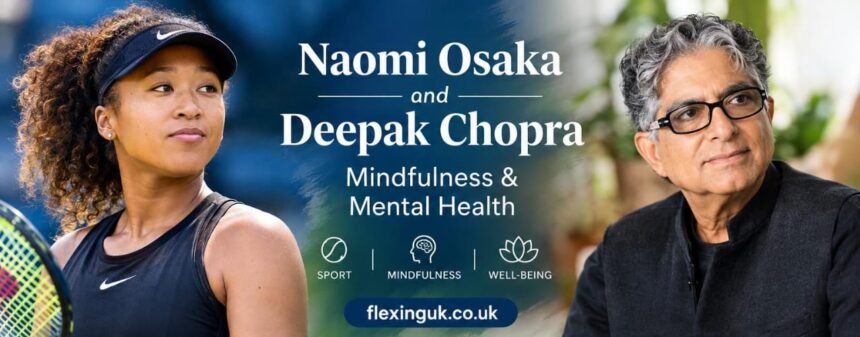
Naomi Osaka and Deepak Chopra come from very different professional worlds. Osaka is a Japanese tennis champion known for four Grand Slam singles titles and a former world No. 1 ranking. Deepak Chopra is a physician, author, and prominent figure in meditation, mindfulness, and mind-body wellness.
So why does the search for Naomi Osaka and Deepak Chopra attract attention? The strongest connection is not necessarily a shared career or a documented long-term partnership. Instead, the two names can be explored through a broader subject: mental well-being, mindfulness, pressure, self-awareness, and performance.
Osaka has openly discussed mental health and her experiences with meditation, while Chopra has spent decades teaching meditation and wellness practices. That makes their stories interesting to compare, provided the differences between their careers and personal approaches are kept clear.
Who Is Naomi Osaka?
Naomi Osaka is one of the most recognizable tennis players of her generation. She won her first Grand Slam title at the 2018 US Open and later won the Australian Open in 2019 and 2021 and the US Open again in 2020. The WTA records her as a four-time Grand Slam singles champion and former world No. 1.
Her career has also included periods away from competition. The WTA notes that Osaka took a 15-month break from tennis before returning in 2024 following the birth of her daughter.
Osaka’s Career in Perspective
| Area | Naomi Osaka |
|---|---|
| Profession | Professional tennis player |
| National representation | Japan |
| Grand Slam singles titles | 4 |
| Australian Open titles | 2 |
| US Open titles | 2 |
| Former ranking | World No. 1 |
| Playing style | Right-handed |
| Notable public topic | Mental health and athlete well-being |
Her career illustrates the demanding nature of elite individual sport. Tennis players often travel internationally, compete under intense public attention, and have to manage both physical preparation and emotional pressure.
Who Is Deepak Chopra?
Deepak Chopra, M.D., is a physician and author whose work focuses heavily on meditation, consciousness, self-awareness, and holistic well-being. His official website describes his work as combining ancient spiritual traditions with modern approaches to science and wellness.
Chopra has also developed meditation programs and educational resources. His current official platform includes guided meditation journeys covering subjects such as awareness, stress, sleep, and personal growth.
Chopra’s Main Areas of Work
His public work commonly involves:
- Meditation
- Mindfulness
- Stress management
- Self-awareness
- Mind-body relationships
- Personal development
- Spirituality and consciousness
- Wellness education
His career is therefore quite different from Osaka’s. One is primarily associated with professional sport, while the other is associated with medicine, writing, meditation, and wellness education.
Naomi Osaka and Deepak Chopra: Where Do Their Stories Connect?
The most useful way to understand Naomi Osaka and Deepak Chopra is through shared themes rather than assuming that they have the same career or philosophy.
One important theme is mental well-being.
Osaka has publicly spoken about her experiences with mental health and meditation. In a 2022 interview with Fortune, she discussed beginning therapy and learning to use meditation as part of her own approach to mental fitness. She explained that meditation initially felt difficult because she wondered whether she was doing it correctly, but she eventually found the practice more helpful.
Chopra, meanwhile, has spent decades teaching meditation as a practice involving awareness and attention. His official resources include guided meditation programs for stress, anxiety, sleep, and self-awareness.
This creates a meaningful comparison without claiming a personal connection that has not been established by reliable sources.
Did Naomi Osaka Work Directly With Deepak Chopra?
This is an important question because online searches can sometimes make two public figures appear connected simply because their names occur together.
There is not enough reliable evidence to establish a major direct professional partnership between Naomi Osaka and Deepak Chopra.
Osaka has documented wellness and meditation collaborations with organizations including Modern Health and Hyperice. In 2022, Modern Health announced her involvement as a community health advocate and board observer, while also developing meditation content featuring Osaka.
Chopra has had his own wellness collaborations. For example, Fitbit announced a partnership with Chopra in 2021 involving mindfulness and meditation content for Fitbit Premium users.
These examples show that both have participated in wellness-related projects, but they should not be presented as evidence of a direct Osaka-Chopra partnership.
Naomi Osaka’s Approach to Meditation
Meditation can sound complicated when it is discussed as an abstract wellness concept. Osaka’s comments offer a more relatable perspective because she described learning it as a process rather than something she immediately mastered.
In her discussion with Fortune, Osaka explained that she initially questioned whether she was meditating correctly. Over time, she came to understand that having thoughts during meditation does not necessarily mean the practice has failed.
This distinction is useful for beginners.
A Simple Example
Incorrect assumption:
“I cannot meditate because my mind keeps producing thoughts.”
More practical understanding:
“Thoughts are normal. Meditation can involve noticing them and returning attention to the chosen focus.”
The second approach removes the pressure to achieve a completely empty mind.
How Deepak Chopra Explains Mindfulness
Chopra’s public teachings place considerable emphasis on awareness and observing the mind rather than automatically reacting to every thought.
In an interview with AARP, he described meditation as a form of awareness and discussed simple breathing practices as an accessible starting point.
His official meditation platform also offers structured programs for people who want guided rather than completely independent practice.
For someone new to mindfulness, that can be translated into a simple routine:
- Sit somewhere reasonably quiet.
- Pay attention to your breathing.
- Notice when your attention wanders.
- Avoid judging yourself for losing focus.
- Gently return your attention to the breath.
- Continue for a short period rather than forcing a long session.
The goal is consistency, not perfection.
What Can Athletes Learn From Mindfulness?
Mindfulness is not a substitute for athletic training, coaching, medical care, or psychological support. However, it can be discussed as one possible tool for managing attention and developing greater awareness.
For athletes, the practical questions may include:
- Can I stay focused after making a mistake?
- Can I recognize tension before it affects my performance?
- Can I avoid becoming overwhelmed by outside expectations?
- Can I return my attention to the present moment?
- Can I separate one difficult moment from the rest of a competition?
These questions are particularly relevant to individual sports because athletes must often manage their thoughts while competing without teammates physically sharing the court.
Osaka’s public discussion of mental health and meditation has helped make these subjects more visible in professional sports. Her documented meditation projects with Modern Health and Hyperice also demonstrate how mindfulness content can be incorporated into broader wellness initiatives.
Mental Health and Professional Pressure
Naomi Osaka’s public conversations about mental health became an important part of her public profile, particularly after she withdrew from the 2021 French Open and subsequently took time away from competition.
It is important, however, to describe her experiences accurately rather than turning them into a general medical lesson.
A professional athlete can experience pressure from several directions:
- Competition
- Media attention
- Travel
- Expectations from fans
- Social media
- Physical demands
- Career uncertainty
- Personal responsibilities
Meditation may be useful for some people, but mental health needs vary considerably. Therapy, medical care, social support, rest, exercise, and other approaches can also play important roles depending on the individual.
Naomi Osaka and Deepak Chopra: Similar Themes, Different Paths
Putting the two figures side by side reveals several interesting differences.
| Topic | Naomi Osaka | Deepak Chopra |
|---|---|---|
| Main field | Professional tennis | Medicine, writing and wellness |
| Public focus | Sport, competition and mental well-being | Meditation, consciousness and wellness |
| Meditation connection | Has discussed her own meditation experience | Has taught and developed meditation programs |
| Performance context | Elite competitive sport | Personal and holistic well-being |
| Career path | Athlete | Physician, author and wellness educator |
| Common theme | Mental awareness | Mental awareness |
The comparison works best when it remains factual. Osaka’s experience should not be portrayed as proof of Chopra’s teachings, and Chopra’s philosophy should not automatically be attributed to Osaka.
Common Mistakes When Discussing the Two
Mistake 1: Assuming They Have a Major Partnership
A search result or article mentioning both names does not automatically prove a formal collaboration.
Better approach: Check whether an official announcement, interview, or reputable publication documents the relationship.
Mistake 2: Treating Meditation as a Cure
Meditation can be part of a wellness routine, but it should not automatically be described as a cure for mental health conditions.
Better approach: Use careful language such as “may support well-being” or “can be used as a mindfulness practice.”
Mistake 3: Ignoring Osaka’s Own Experience
It would be inaccurate to discuss Osaka’s mental-health story only through the lens of another wellness figure.
Better approach: Start with Osaka’s documented comments and experiences, then discuss how they relate to broader conversations about mindfulness.
Mistake 4: Mixing Fact With Interpretation
For example:
Weak wording:
“Deepak Chopra taught Naomi Osaka how to handle pressure.”
There is no reliable evidence supporting that specific statement.
Better wording:
“Osaka has discussed meditation and mental wellness, while Chopra has spent decades teaching meditation and related wellness practices.”
The second sentence stays within what available sources document.
How to Write About Naomi Osaka and Deepak Chopra Accurately
If you are researching this topic for an article, assignment, or general interest, use a simple fact-checking method.
Step 1: Separate the Two Careers
First establish who each person is independently.
Step 2: Look for Documented Connections
Search for interviews, official announcements, event records, or reputable news reports that directly connect the two.
Step 3: Avoid Assuming a Relationship
If two names appear together in search results, that alone is not evidence of a collaboration.
Step 4: Use Primary Sources When Possible
The WTA is useful for Osaka’s tennis record, while Chopra’s official website provides information about his current work and meditation programs.
Step 5: Keep Wellness Claims Careful
Health and mental-health statements require especially precise language. Personal experiences should not be presented as universal medical evidence.
Why This Topic Continues to Attract Interest
The combination of an elite athlete and a well-known wellness educator naturally raises questions about performance and mental balance.
Osaka represents the world of professional competition, where concentration and emotional control can matter alongside physical ability. Chopra represents a wellness tradition that emphasizes meditation, awareness, and the relationship between mind and body.
That does not mean the two have identical beliefs or professional methods. Instead, their separate careers provide two different perspectives on a subject that has become increasingly visible: how people can think about mental well-being while dealing with demanding lives.
Frequently Asked Questions
1. Who are Naomi Osaka and Deepak Chopra?
Naomi Osaka is a Japanese professional tennis player and four-time Grand Slam singles champion. Deepak Chopra is a physician and author known for his work involving meditation, consciousness, and holistic wellness.
2. Are Naomi Osaka and Deepak Chopra partners?
Reliable sources do not establish a major direct professional partnership between Osaka and Chopra. Osaka has documented wellness collaborations with Modern Health and Hyperice, while Chopra has worked with organizations such as Fitbit on meditation and mindfulness content.
3. Does Naomi Osaka meditate?
Yes. Osaka has publicly discussed meditation and described how she initially found it challenging before developing a more comfortable approach to the practice.
4. What is Deepak Chopra known for?
Chopra is known for writing, teaching, and developing programs related to meditation, mindfulness, consciousness, and holistic well-being.
5. How many Grand Slam titles has Naomi Osaka won?
Osaka has won four Grand Slam singles titles: the US Open in 2018 and 2020 and the Australian Open in 2019 and 2021.
6. Why is Naomi Osaka associated with mental health discussions?
Osaka has spoken publicly about her experiences with mental health and has participated in projects designed to make mental wellness resources more accessible. Her work with Modern Health included meditation content and mental-health advocacy.
7. Can meditation help with stress?
Meditation and mindfulness are commonly used as wellness practices for stress management. However, individual results vary, and meditation should not be treated as a replacement for professional medical or mental-health care when that care is needed. Chopra’s wellness programs include meditation resources focused on stress and related concerns.
8. What is the main connection between Naomi Osaka and Deepak Chopra?
The clearest connection is thematic rather than a documented major partnership: both have been publicly associated with conversations about mental well-being and mindfulness, although their careers and professional roles are very different.
Conclusion
Naomi Osaka and Deepak Chopra represent two very different professional journeys that intersect around an increasingly important topic: mental well-being.
Osaka’s career demonstrates the pressures associated with elite professional tennis, while her public discussions and meditation projects have contributed to wider conversations about mental wellness. Chopra has built a long career around meditation, consciousness, and holistic approaches to well-being.
The practical takeaway is simple: their stories can be compared through themes such as mindfulness, self-awareness, pressure, and personal well-being, but the available evidence should not be stretched into a claim of a major direct partnership. Keeping that distinction clear makes the topic more accurate, useful, and trustworthy.