



Introduction
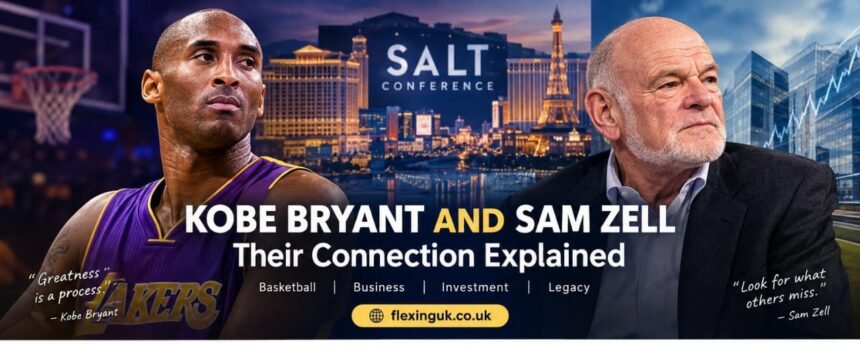
The names Kobe Bryant and Sam Zell come from two very different worlds. Bryant was an iconic basketball player whose career was defined by the Los Angeles Lakers, championships, intense preparation, and an unusually competitive mindset. Zell, meanwhile, was a Chicago-born entrepreneur and investor best known for building a major real-estate empire and developing a reputation for finding opportunities in troubled assets.
So why do Kobe Bryant and Sam Zell appear together in searches?
The most important answer is that the two men were both associated with the SALT Conference, a high-profile gathering that brought together investors, entrepreneurs, political figures, entertainers, and influential voices from different industries. The 2016 SALT Conference program specifically listed both Bryant and Zell among its featured speakers.
However, it is important not to turn that documented overlap into a story of a close friendship or business partnership without evidence. Their connection is better understood as an intersection of two different approaches to achievement: Bryant represented elite performance in sport and later entrepreneurship, while Zell represented unconventional thinking and opportunistic investing.
That distinction makes the story more interesting, not less. It allows us to examine how two highly successful people from different professional cultures approached risk, preparation, leadership, and long-term success.
Who Were Kobe Bryant and Sam Zell?
Before exploring their connection, it helps to understand the two individuals separately.
| Figure | Primary field | Best known for | Broader influence |
|---|---|---|---|
| Kobe Bryant | Basketball, media, investing | Los Angeles Lakers career and competitive philosophy | Sports, storytelling, entrepreneurship |
| Sam Zell | Investment and real estate | Equity Group Investments and real-estate investing | Business, finance, entrepreneurship |
Their careers followed different paths, but both eventually became influential outside their original professions.
Kobe Bryant: From Basketball Icon to Entrepreneur
Kobe Bryant spent his professional basketball career with the Los Angeles Lakers and became one of the defining players of his generation. His influence, however, did not end with basketball.
After years of playing at the highest level, Bryant began building a business and media portfolio. In 2014, through Kobe Inc., he invested $6 million in BodyArmor, a sports-drink company. The investment later became extremely valuable after Coca-Cola acquired a minority stake in the company in 2018.
Bryant also founded what became Granity Studios, a multimedia company focused on storytelling through books, film, television, and other forms of media. His post-basketball ambitions showed that he was interested in building intellectual property and businesses rather than simply attaching his name to products.
In 2016, Bryant and Jeff Stibel launched Bryant Stibel, a venture-capital firm focused on businesses in areas including technology, media, and data.
Sam Zell: The “Grave Dancer” of Investing
Sam Zell followed an entirely different professional route.
He began investing in real estate while he was still a University of Michigan student and later established Equity Group Investments. His strategy often involved identifying distressed properties and businesses where other investors saw primarily problems rather than potential.
Zell became particularly influential in the development of the modern real-estate investment trust, or REIT, structure. His career eventually extended beyond real estate into areas such as logistics, energy, transportation, manufacturing, healthcare, and media.
His nickname, the “Grave Dancer,” reflected his willingness to look for opportunities in troubled assets. Rather than following popular opinion, Zell frequently emphasized independent judgment and recognizing value where others did not.
Where Did Kobe Bryant and Sam Zell Cross Paths?
The clearest documented intersection between Kobe Bryant and Sam Zell came through the SALT Conference.
The 2016 event was held at the Bellagio in Las Vegas from May 10 to May 13. It brought together more than 1,800 people from finance, alternative investments, politics, public policy, science, pop culture, and philanthropy. Both Bryant and Zell were included among the featured speakers.
This context matters because SALT was not a traditional sports event or real-estate conference. It was designed to put influential people from different professional backgrounds into the same intellectual and networking environment.
Bryant’s appearance therefore represented more than his achievements as an NBA player. By that stage of his life, he was increasingly being viewed as an entrepreneur, investor, storyteller, and leadership voice.
Zell represented another side of the same broader conversation: entrepreneurship, investment, markets, and unconventional decision-making.
What the SALT Connection Does—and Does Not—Show
The available evidence supports saying that Bryant and Zell were both part of the SALT speaker community.
It does not, by itself, establish that they were close friends, business partners, or long-term mentors to one another.
This is an important distinction when researching famous people.
Incorrect:
“Kobe Bryant and Sam Zell were longtime business partners.”
Correct:
“Kobe Bryant and Sam Zell were both featured figures at the SALT Conference, bringing sports, entrepreneurship, and investment into the same broader conversation.”
The Indirect Lakers Connection: Sam Zell and Phil Jackson
There is another interesting link between Zell and Bryant, although it is indirect.
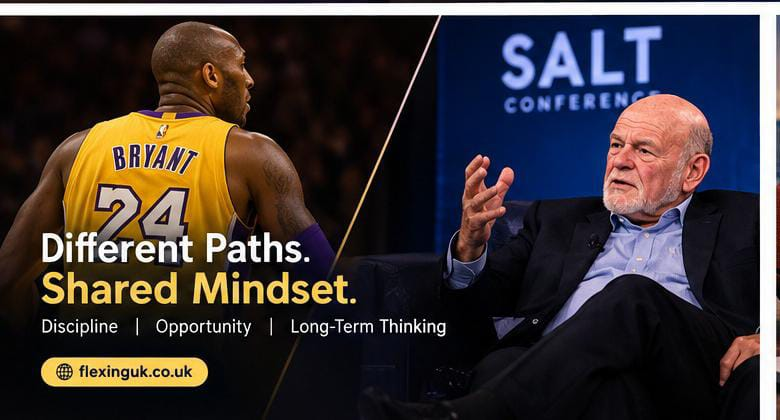
In 2007, The Los Angeles Times reported that Lakers coach Phil Jackson had known Sam Zell since their Chicago days. Jackson described living in the same area as Zell and sharing an interest in motorcycles. The article also discussed the possibility of Zell attending a Lakers game with Jackson.
This creates an intriguing chain of association:
Sam Zell → Phil Jackson → Kobe Bryant
Bryant worked extensively with Jackson during his Lakers career, while Jackson had a longstanding personal acquaintance with Zell.
But this should not be presented as evidence that Bryant and Zell had a personal relationship. It is better described as an indirect Lakers-world connection.
That careful distinction is particularly important for SEO articles about public figures, because search results can easily transform a small factual connection into an exaggerated narrative.
Different Professions, Similar Ideas About Excellence
The deeper reason the names Kobe Bryant and Sam Zell make an interesting pair is not that their careers were similar. They weren’t.
The comparison becomes useful when looking at how each approached achievement.
Preparation Was Central to Bryant’s Philosophy
Bryant became famous for his extraordinary commitment to preparation.
For him, talent was only the starting point. Skill had to be developed through repetition, analysis, discipline, and a willingness to confront weaknesses.
That philosophy later carried into his business activities. His transition from athlete to investor was not simply a celebrity endorsement exercise. Reporting on his business career described how seriously he approached learning entrepreneurship and investing.
The lesson is straightforward: entering a new field requires becoming a student again.
Zell Built Around Opportunity and Contrarian Thinking
Zell’s approach looked different but shared an emphasis on independent thinking.
His career was built around recognizing opportunities that were not always obvious to conventional investors. MIT described his approach as entrepreneurial and noted his ability to identify value in distressed real estate.
Instead of asking only what was popular, Zell often considered what the market was overlooking.
That kind of thinking can be summarized as:
- Identify the problem.
- Understand why others are avoiding it.
- Determine whether the underlying value remains.
- Calculate the risks.
- Act when the opportunity justifies the risk.
It is a very different process from shooting a basketball, but the underlying discipline—careful analysis before decisive action—is recognizable.
Risk: What Their Careers Can Teach Us
Risk is another useful lens through which to compare the two.
Bryant’s professional risks were often visible. Taking a difficult shot, changing his playing style, recovering from setbacks, or entering unfamiliar business sectors could all expose him to failure.
Zell’s risks were primarily financial and strategic. His investment career involved distressed properties and companies, situations where outcomes were uncertain and conventional investors could be reluctant to participate.
Neither approach suggests that successful people simply “take risks.”
A better lesson is:
Successful risk-taking is usually informed risk-taking.
The distinction is crucial.
Risk vs. Recklessness
| Risk-taking | Recklessness |
|---|---|
| Based on research | Based mainly on emotion |
| Considers downside | Ignores consequences |
| Has a defined objective | Has no clear objective |
| Accepts uncertainty | Assumes success is guaranteed |
| Learns from previous outcomes | Repeats mistakes without analysis |
This principle applies far beyond sports and investing.
A student deciding whether to change careers, an entrepreneur launching a company, or an investor evaluating an opportunity can all benefit from understanding the difference

.
Why Kobe’s Business Career Matters to This Story
It would be easy to treat Bryant only as a basketball legend and Zell only as a real-estate billionaire. That would miss one of the most interesting aspects of their appearances in the same business-oriented environment.
Bryant was actively constructing a second identity.
His investments and media projects demonstrated an interest in building businesses with long-term value rather than relying entirely on his reputation as an athlete. The BodyArmor investment, Granity Studios, and Bryant Stibel were important pieces of that evolution.
That transition is significant because elite athletes increasingly have opportunities to become entrepreneurs, investors, creators, and brand builders.
Bryant was one of the highly visible examples of that shift.
What Sam Zell’s Career Adds to the Comparison
Zell provides a useful counterpoint.
Where Bryant entered the investment world after establishing himself in sport, Zell spent decades developing expertise in markets, real estate, corporate strategy, and distressed investing.
His investment firm, Equity Group Investments, became the center of a broad portfolio. Zell’s interests extended across multiple industries rather than remaining confined to a single category.
That makes the comparison less about “who was more successful” and more about how expertise can evolve.
Bryant showed that a person known primarily for one extraordinary skill can build credibility in other fields by studying them seriously.
Zell showed how entrepreneurial thinking can be transferred across industries.
A Shared Interest in Building Beyond the Original Career
One of the strongest themes linking the two men is the idea of building beyond an initial profession.
Bryant could have simply retired from basketball and remained a famous former athlete. Instead, he pursued storytelling, investing, and business.
Zell could have concentrated exclusively on real estate. Instead, his investment interests expanded into numerous industries.
This creates a useful principle for modern professionals:
Your first career does not have to define the limits of your second one.
Skills such as discipline, negotiation, analysis, communication, leadership, and decision-making can transfer into new environments.
Common Misunderstandings About Kobe Bryant and Sam Zell
Because the keyword brings two recognizable names together, several assumptions can appear in online discussions.
They Were Not Simply Business Partners
There is no reliable basis in the sources reviewed here for describing Bryant and Zell as business partners.
The strongest documented connection is their appearance within the SALT Conference’s broader speaker network.
Their Connection Was Not Primarily About the Lakers
Zell’s connection to the Lakers is more directly documented through his relationship with Phil Jackson in 2007.
That is different from having a documented ownership, investment, or executive relationship with Bryant or the Lakers.
Similar Success Does Not Mean Similar Careers
Bryant’s achievements were rooted in professional sport, while Zell’s were rooted in entrepreneurship and investing.
Comparing their careers can reveal common principles, but it should not erase the differences between them.
What Can Readers Learn From Their Stories?
The real value of examining Kobe Bryant and Sam Zell together comes from extracting broader lessons.
1. Become a Student When You Enter a New Field
Bryant’s move into investing illustrates the importance of learning beyond an established area of expertise.
Being successful in one profession does not automatically make someone an expert in another.
2. Look Beyond Conventional Opportunities
Zell built much of his reputation by finding potential in situations others considered unattractive.
The broader lesson is to investigate assumptions rather than automatically accepting them.
3. Build Something That Outlasts a Job Title
Bryant’s businesses and creative projects expanded his legacy beyond basketball.
Zell similarly built organizations and investment platforms that extended beyond individual transactions.
4. Reputation Matters
Both careers demonstrate the value of credibility.
In sports, reputation is built through performance.
In business, it is built through decisions, relationships, judgment, and results.
5. Do Not Confuse Confidence With Certainty
Bryant’s confidence on the court and Zell’s conviction as an investor were powerful traits, but confidence works best when supported by preparation and analysis.
That is a useful distinction for anyone trying to improve professionally.
Grammar and Usage: How to Write About Two Famous People Correctly
Because this keyword contains two names, writers sometimes create awkward sentences when trying to use it repeatedly.
The best approach is to use the exact keyword naturally once or twice, then use pronouns and related phrases where appropriate.
Incorrect vs. Correct
Incorrect:
“Kobe Bryant and Sam Zell were both successful and Kobe Bryant and Sam Zell had different careers.”
Correct:
“Kobe Bryant and Sam Zell were both highly successful, although their careers developed in very different fields.”
Another example:
Incorrect:
“The story of Kobe Bryant and Sam Zell shows that Kobe Bryant and Sam Zell were similar.”
Correct:
“The story of Kobe Bryant and Sam Zell offers an interesting comparison between athletic excellence and entrepreneurial thinking.”
Use “and” Carefully
When two people are the subject of a sentence, the verb is generally plural.
Correct:
“Kobe Bryant and Sam Zell were influential figures.”
Incorrect:
“Kobe Bryant and Sam Zell was influential figures.”
However, when discussing each person separately, singular verbs are appropriate:
- Kobe Bryant was an accomplished athlete.
- Sam Zell was an influential investor.
This simple grammatical distinction helps keep biographical writing clear.
Frequently Asked Questions
Were Kobe Bryant and Sam Zell friends?
There is not enough reliable documentation to describe them as close personal friends. The clearest documented connection is that both were featured at the SALT Conference.
What connected Kobe Bryant and Sam Zell?
Their most clearly documented connection was their participation as featured figures at the 2016 SALT Conference in Las Vegas. Zell also had a longstanding acquaintance with Lakers coach Phil Jackson, creating an indirect connection to Bryant’s Lakers world.
Did Sam Zell own the Los Angeles Lakers?
The sources reviewed for this article do not establish Sam Zell as an owner of the Los Angeles Lakers. His documented business interests included real estate, media, energy, transportation, healthcare, and other sectors.
Was Kobe Bryant an investor?
Yes. Bryant developed an investment and business career alongside his basketball career. His ventures included Kobe Inc., a notable early investment in BodyArmor, and Bryant Stibel, a venture-capital firm launched with Jeff Stibel.
What was Sam Zell famous for?
Sam Zell was best known for his entrepreneurial investment career and pioneering role in commercial real estate, particularly through Equity Group Investments and major REIT-related businesses.
What was Kobe Bryant famous for outside basketball?
Beyond basketball, Bryant became involved in investing, media production, storytelling, and entrepreneurship. Granity Studios and Bryant Stibel were among the major parts of his post-playing business and creative career.
Did Kobe Bryant and Sam Zell work together?
There is no strong evidence in the sources reviewed that they operated a joint company or partnership. Their documented overlap is primarily associated with the SALT Conference and the wider business and leadership community around it.
Why are Kobe Bryant and Sam Zell discussed together?
The combination is interesting because both became influential figures beyond their original professions. Bryant expanded from basketball into business and storytelling, while Zell expanded from real estate into a wide-ranging investment career. Their shared presence at SALT provides a documented point of intersection.
Conclusion
The story of Kobe Bryant and Sam Zell is not primarily a story of a famous friendship or a documented business partnership. It is a story about an unusual intersection between two influential careers.
Bryant represented competitive excellence, preparation, creativity, and a willingness to build a new professional identity after basketball. Zell represented entrepreneurial independence, investment discipline, and a willingness to search for value where others saw difficulty.
Their appearance within the same SALT Conference community brought those worlds together.
The practical takeaway is simple: great careers are rarely limited to one skill or one industry. Whether the arena is