



Introduction
The keyword antarvwsna appears in online searches related to Hindi-language stories, personal desires, and adult-oriented fiction. However, its meaning can vary depending on the website and context in which it appears. Readers looking for information about this term may want to understand its meaning, discover the type of stories associated with it, or learn how to explore online content more safely.
Understanding a search term before visiting unfamiliar websites is a useful first step. It helps readers recognize what kind of material they may encounter, evaluate whether a website is trustworthy, and make informed decisions about privacy. It is also important to distinguish between the meaning of a word, the subject of a fictional story, and the claims a website makes about its content.
This guide explains the meaning and online use of antarvwsna, discusses common storytelling themes, and offers practical advice for responsible browsing. Rather than assuming every website provides the same experience, it considers the topic from the perspectives of language, digital reading, content quality, and online safety.
What Is Antarvwsna?
Antarvwsna is a spelling that appears in online searches and is commonly associated with the related term antarvasna. Depending on the context, the term may refer to inner desires or be used as a search label for Hindi-language fiction, including adult-oriented stories.
The exact spelling matters because similar-looking words can have different uses across languages and websites. Some online publishers use modified spellings as titles, categories, or search keywords. Consequently, readers should not assume that every page using the word refers to the same platform, literary tradition, or type of material.
When researching antarvwsna, it helps to consider three distinct aspects:
- Language: The possible connection between the term and ideas about inner desires or personal feelings.
- Storytelling: Its use as a keyword associated with Hindi fiction and relationship-based narratives.
- Online browsing: The websites, story collections, or search results that use the term to attract readers.
Keeping these meanings separate makes it easier to evaluate information accurately. It also prevents confusion when different websites explain the same keyword in different ways.
Understanding the Meaning of Antarvwsna
Words connected with emotions, desires, and personal motivations often have meanings that depend on context. In this case, the related spelling antarvasna is commonly interpreted online in connection with inner desire. However, antarvwsna itself should not automatically be treated as a standardized English word or as a term with one universally accepted definition.
The meaning presented on a particular page may depend on whether the writer is discussing language, literature, relationships, or online entertainment.
The Possible Linguistic Connection
The element antar is associated with the idea of being inside or within in Sanskrit and related language contexts. The related word vāsanā has a broader range of meanings in Indian philosophical traditions, including desire, inclination, and mental impressions.
These linguistic connections provide useful background, but they do not prove that every modern spelling has an established historical definition. The spelling antarvwsna may function primarily as an online keyword rather than as a formal linguistic term.
For accurate writing, it is best to explain this distinction instead of presenting an uncertain interpretation as an established fact.
Why Context Matters
Consider the following examples:
- A language article might discuss the possible meaning of a word and its relationship to other terms.
- A literary review might examine how a fictional character’s private feelings influence a decision.
- An online entertainment page might use the keyword to categorize stories intended for a mature audience.
Although these examples use related ideas, their purposes are different. A reader searching for a definition may need a language explanation, while someone exploring fiction may be more interested in plot, genre, and writing style.
Understanding the context helps readers find relevant information without relying entirely on a search-result title.
Antarvwsna and Hindi Online Stories
Hindi-language storytelling covers a wide range of subjects, from family relationships and friendship to mystery, romance, social challenges, and personal development. Some online collections also use keywords associated with adult-oriented fiction.
The term antarvwsna is often encountered in this latter search context. However, the label alone does not establish the quality, accuracy, originality, or suitability of an individual story. Those qualities must be assessed by examining the actual content and the way the publisher presents it.
Common Themes in Relationship-Based Fiction
Relationship-focused stories often explore how people communicate, respond to challenges, and make difficult decisions. Depending on the genre, a story may include themes such as:
- Trust and communication between characters.
- Emotional misunderstandings and their consequences.
- Personal boundaries and individual choices.
- Family expectations and social pressures.
- Conflicts between personal goals and responsibilities.
- The development of relationships over time.
These themes can provide a foundation for meaningful fiction when authors develop believable characters and clear motivations. A strong story gives readers enough information to understand why a character acts in a particular way.
However, not every story associated with a keyword explores these subjects thoughtfully. Readers should judge each work on its own merits rather than assuming that a category label guarantees a particular experience.
The Importance of Story Quality
A well-written story generally has a clear premise, consistent characters, understandable language, and a logical sequence of events. These elements help readers follow the narrative and understand its central conflict.
When exploring online fiction, consider whether the writing offers a coherent beginning, a developed middle, and a meaningful ending. Repeated passages, confusing character changes, excessive advertising, and unclear authorship may reduce the reading experience.
For readers who value originality, it is also useful to look for a named author, publication information, or an explanation of how the work was produced. Such details do not automatically prove originality, but they can help readers evaluate the publisher more carefully.
Also Read: Backtofrontshow Pricing: What to Know Before Choosing a Plan

How to Evaluate a Website Before Reading
A website’s name or popularity in search results does not guarantee that it is safe, reliable, or suitable for every visitor. Before using an unfamiliar website associated with antarvwsna, take a moment to review its basic features.
Check the Website’s Identity
Look for an About page, contact information, privacy policy, and terms of use. These pages can help explain who operates the website, what information it collects, and how users can contact the publisher.
Missing information is not conclusive proof of wrongdoing, but it is a reason to exercise caution. Be especially careful when a website makes strong claims without providing supporting details.
Review the Content and Advertisements
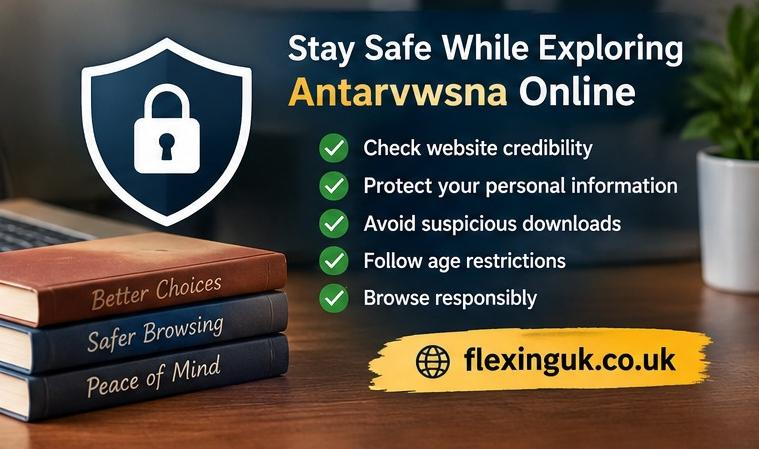
Notice how the website presents its stories and whether advertisements interfere with ordinary browsing. Unexpected redirects, repeated pop-ups, misleading download buttons, and requests to install unknown software are warning signs.
A legitimate reading experience should not require users to reveal unnecessary personal information or install unfamiliar programs simply to view a page.
Look for Clear Privacy Information
A privacy policy should explain how the website handles information such as account details, cookies, and browsing-related data. If registration is required, check whether the requested information is necessary for the service.
Avoid entering passwords, financial details, private photographs, or identifying information into forms that you do not trust. If a website requests sensitive details without a clear reason, consider leaving the page.
Online Privacy and Responsible Browsing
Privacy is an important consideration when visiting websites that host entertainment or mature-themed material. A few simple precautions can reduce unnecessary exposure of personal information.
Protect Personal Information
Use unique passwords for accounts and enable additional account security where available. Avoid using the same password across multiple websites, particularly when you are unsure how a service protects user information.
Be cautious about connecting social media accounts to unfamiliar platforms. Review the permissions requested before authorizing an application or service to access your profile.
Avoid Suspicious Downloads
Reading a story should not ordinarily require downloading an unknown executable file or browser extension. If a page displays a download prompt that seems unrelated to the content, do not proceed without verifying its purpose.
Keep your browser and operating system updated, and use reputable security software when appropriate. These measures can help reduce exposure to known security threats, although no tool can guarantee complete protection.
Understand Cookies and Tracking
Some websites use cookies to remember preferences, measure traffic, or support advertising. Other tracking technologies may collect information about browsing activity.
Review cookie choices and privacy settings where they are available. Remember that a website’s privacy policy describes its stated practices; it is not an independent guarantee that every practice is implemented correctly.
Read more: JFrog PFP: Understanding the Meaning, Design, and Best Uses of a JFrog Profile Picture
Respect Age Restrictions
Some online stories contain mature themes and are intended only for adults. Users should follow the applicable age restrictions and local laws. Parents and guardians can also use suitable device controls and family-safety settings to help protect younger readers from age-inappropriate material.
How to Choose Better Online Fiction
Readers can improve their experience by considering more than a story’s title or keyword. A little attention to writing quality, genre, and publication details can make it easier to identify material that matches their interests.
Read the Description First
A short description often explains the central conflict, setting, and type of story. Use that information to decide whether the narrative is relevant to your interests.
Do not rely on a dramatic headline alone. Headlines may be designed to attract clicks without accurately representing the content.
Consider the Author’s Writing Style
Clear dialogue, consistent characterization, and a logical plot usually make fiction easier to follow. Look for writing that develops its ideas rather than repeating the same information throughout the story.
If you are interested in Hindi fiction, you may also want to consider language quality. Natural dialogue and appropriate vocabulary can make a narrative more engaging and easier to understand.
Prefer Transparent Publishers
Websites that identify authors, provide publication details, and explain their content policies give readers more information to evaluate. These features do not guarantee that every story is original or high quality, but they support a more informed reading decision.
If you discover a story that you want to share, check the publisher’s copyright terms first. Reading a work online does not automatically give you permission to copy it, republish it, or use it commercially.
Common Mistakes When Searching for Antarvwsna
Search engines can produce confusing results when a keyword has several spellings or is associated with different types of content. Avoiding a few common mistakes can make your research more effective.
Assuming Every Result Has the Same Meaning
A page discussing a word’s linguistic background is not necessarily describing the same subject as a website hosting fictional stories. Read the title and introduction carefully before deciding whether the result answers your question.
Trusting Headlines Without Checking the Page
Search-result titles may contain exaggerated claims or vague promises. Open the page only if it appears appropriate, and evaluate the information it actually provides.
Ignoring Website Security
Do not assume a website is safe simply because it appears near the top of search results. Review its address, avoid suspicious redirects, and never provide sensitive information without a clear reason.
Confusing Originality With Uniqueness of a Keyword
A page can use a distinctive keyword while still containing copied or repetitive material. Originality depends on the substance of the writing, not just its title or keyword placement.
Writers and publishers should develop their own explanations, examples, and analysis rather than copying existing articles or making minor changes to another author’s work.
Tips for Writers Covering the Keyword Antarvwsna
Content creators who plan to publish an article targeting antarvwsna should focus on accurate explanations and a clear purpose. Search optimization can help readers discover a page, but useful information is what gives them a reason to continue reading.
Match the Search Intent
Begin by deciding what the intended reader wants to know. If the article explains the term, provide a careful definition and discuss spelling variations. If it covers online storytelling, explain the relevant genres and reading considerations without pretending that every website offers the same material.
Avoid making promises that the article cannot support. For example, do not describe a website as completely safe, entirely free, or officially verified unless reliable evidence supports that statement.
Use Keywords Naturally
Include the primary keyword in the title, introduction, and a relevant heading where it reads naturally. Related phrases such as Hindi online stories, digital reading, relationship fiction, and online privacy can help explain the topic in context.
Do not repeat antarvwsna in every paragraph simply to increase keyword frequency. Repetition makes an article harder to read and can distract from the information readers actually need.
Prioritize Original and Helpful Information
Write explanations in your own words, use relevant examples, and make clear distinctions between verified information and interpretation. Avoid inventing personal experiences, statistics, website features, or claims about search popularity.
No writer can guarantee a specific plagiarism percentage without checking the finished text against relevant sources. Likewise, no article can guarantee approval from an advertising platform. Publishers should review the applicable content and monetization policies before publishing material in sensitive categories.
Frequently Asked Questions About Antarvwsna
1. What does antarvwsna mean?
Antarvwsna is an online spelling commonly associated with the related term antarvasna. Depending on context, it may be connected with the idea of inner desires or used as a search keyword for Hindi-language fiction, including adult-oriented stories.
2. Is antarvwsna a Hindi word?
The spelling appears in online use, but it should not automatically be treated as a standardized Hindi or Sanskrit form. The related spelling antarvasna is more commonly discussed in connection with inner desire. The exact meaning depends on the context.
3. What type of stories are associated with antarvwsna?
Online searches using this keyword may lead to Hindi fiction and adult-oriented storytelling. The content varies between websites, so readers should check each page’s description, genre, and suitability rather than assuming that every result contains the same material.
4. How can I browse unfamiliar story websites more safely?
Review the website’s privacy policy and contact information, avoid suspicious downloads, and do not provide unnecessary personal details. Be cautious of unexpected redirects, misleading buttons, and requests for sensitive information.
5. Is every website using the keyword antarvwsna trustworthy?
No. A shared keyword does not establish a connection between websites or prove that a publisher is trustworthy. Evaluate the website’s transparency, security practices, content quality, and privacy information before deciding whether to use it.
6. Can I republish a story found online?
Not automatically. Online availability does not remove copyright protection. Check the author’s or publisher’s terms and obtain permission when required before reproducing or commercially using a story.
7. Can an article about antarvwsna be approved for advertising?
Approval depends on the advertising platform’s current policies, the website’s overall quality, and the nature of the published material. Content associated with adult themes may face restrictions, so publishers should review the applicable rules before applying. No particular article can guarantee approval.
8. How can writers make content about antarvwsna more useful?
Writers should explain the term carefully, match the reader’s search intent, provide original information, and avoid unsupported claims. Clear headings, natural keyword placement, practical privacy advice, and accurate descriptions can improve the reader’s experience.
Conclusion
Antarvwsna is a keyword whose meaning depends on how and where it is used. It is commonly associated online with the related term antarvasna and with searches for Hindi-language fiction, including adult-oriented stories. However, the spelling alone does not establish a single definition or guarantee that different websites offer the same type of content.
Readers can make better decisions by checking context, evaluating story quality, protecting personal information, and approaching unfamiliar websites carefully. Writers should follow the same principles by offering original explanations, using keywords naturally, and distinguishing established information from uncertain interpretations.
For more: Visit: FlexingUK