



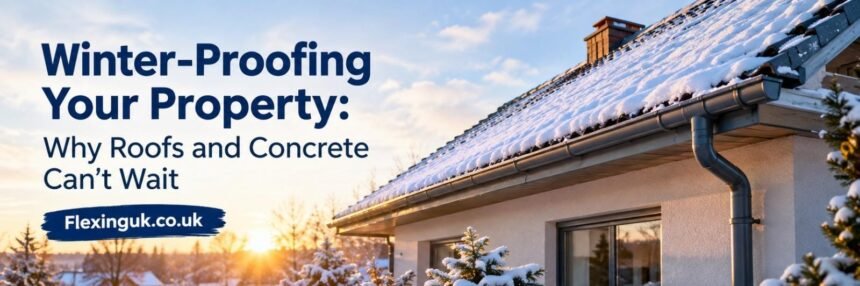
Autumn is the last easy window
The weeks between the first cold nights and the first hard freeze are the cheapest time of year to fix a building. Contractors are still working full schedules, materials cure properly, and small faults have not yet had a winter to grow.
Wait until January and the same job costs more. A loose roof tile becomes a soaked ceiling. A hairline crack in a car park slab becomes a pothole after a dozen freeze-thaw cycles. Whether you own a family home, a rental portfolio or a commercial unit, the logic is the same: find problems while they are still small.
This guide covers the two areas that cause the most expensive winter surprises — roofs and concrete — and how to choose the right people to deal with them.
Start at the top: the roof

A roof rarely fails all at once. It fails at the edges — a lifted shingle, a cracked flashing seal, a valley clogged with leaves — and water does the rest. By the time a stain appears on the ceiling, the decking underneath may already be rotting.
That is why a professional inspection before winter pays for itself. A good inspector will check:
- Missing, cracked or curling shingles and tiles
- Flashing around chimneys, vents and skylights
- Gutters and downpipes, which should run clear and drain away from the walls
- Signs of moisture, mould or daylight in the loft space
- Sagging ridgelines or soft spots that point to structural damage
Regions with harsh continental winters show the value clearly. In the American Midwest, where hail storms in summer are followed by heavy snow and ice dams in winter, booking roof inspections in Kansas City each autumn is standard practice for homeowners and landlords alike. The principle travels well: if your roof has come through a summer of storms, have someone qualified look at it before it faces a winter of rain and frost.
Ask for photos of anything the inspector flags. They give you a record for insurance and a way to compare quotes fairly.
On the ground: concrete and masonry
For commercial property owners, the biggest winter risk is often underfoot. Car parks, loading bays, ramps, steps and walkways all take a beating, and concrete has one great enemy: water that gets in and then freezes.
Water expands by about 9% when it turns to ice. Each freeze-thaw cycle pushes small cracks a little wider. Add de-icing salt, which speeds up corrosion of steel reinforcement, and a sound slab can start spalling and flaking within a few seasons.
The warning signs are easy to spot on a walk round the site:
- Cracks wider than a credit card’s thickness
- Flaking or pitted surfaces (spalling)
- Rust stains bleeding through the concrete
- Uneven slabs that create trip hazards
- Crumbling mortar joints in brick or block walls
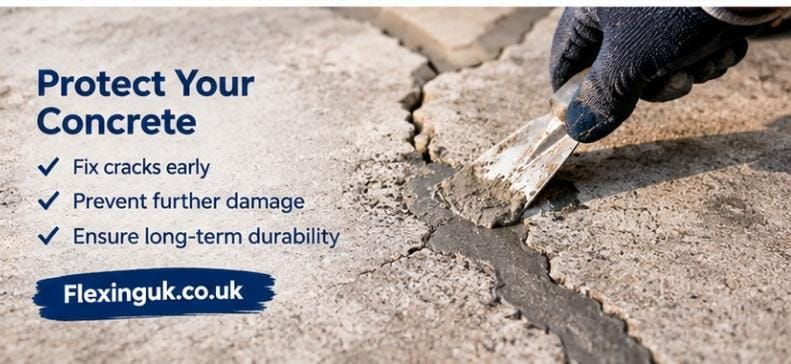
These are more than cosmetic. A trip on a broken step is a liability claim, and corroded reinforcement is a structural problem. Specialist commercial concrete restoration services can assess the damage, repair cracks and spalls, treat exposed steel and apply sealers that keep water out before winter sets in. Repairing early is almost always cheaper than replacing a slab later.
If you manage several sites, keep a simple log of each defect with a date and photo. It shows insurers and tenants that you take maintenance seriously.
Choosing the right people
Autumn is busy season for trades, so the temptation is to hire whoever answers the phone first. Resist it. A few checks will save you from paying twice:
- Ask for proof of insurance. Public liability cover is the minimum; ask for a copy, not a promise.
- Check their specialism. A general builder may patch a crack, but structural concrete and roofing each need specific expertise.
- Get at least three written quotes. Each should list the work, materials, timescale and guarantee.
- Read recent reviews and ask for references. Ideally from jobs similar in size to yours.
- Agree a payment schedule. Avoid large upfront deposits; pay in stages tied to finished work.
- Get the guarantee in writing. Know what it covers and for how long.
Once the work is done, put the next inspection in the calendar. A yearly check of the roof and a walk round the paved areas each autumn turn surprise repairs into planned, budgeted maintenance.
The bottom line
Winter does not create most building problems; it finds the ones already there and makes them worse. A roof inspection and a concrete survey in autumn cost a fraction of an emergency repair in February.
Spend an afternoon walking your property this week. Look up at the roofline, look down at the paving, note what you see and call in the specialists for anything that worries you. Your future self — and your budget — will thank you.
For more: Visit: FLexingUk