



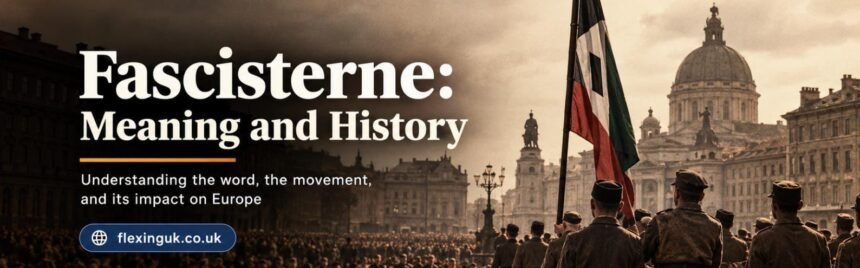
The word fascisterne is associated with one of the most consequential political movements in modern European history. For readers encountering the term in historical documents, Danish-language articles, books, or online discussions, understanding its meaning requires more than a simple translation. It also helps to understand fascism itself, the political conditions that allowed it to grow, and the consequences it had for millions of people.
In Danish, fascisterne generally translates into English as “the fascists.” The word refers to people who support or belong to fascist political movements. Historically, fascism became especially influential in Europe during the period between the First and Second World Wars. Its authoritarian leadership, extreme nationalism, suppression of political opposition, and glorification of national power helped shape some of the darkest chapters of twentieth-century history.
This guide explains the meaning of fascisterne, explores the origins and characteristics of fascism, examines its historical examples, and shows how to understand and use the word accurately.
What Does Fascisterne Mean?
The term fascisterne is a Danish word. Its meaning becomes clearer when it is divided into its basic linguistic parts.
The word is the definite plural form of fascist, meaning a person who supports fascism. In ordinary English, the closest translation is “the fascists.” The exact interpretation can depend on the sentence, historical period, and context in which the word appears.
For example, a Danish history textbook might use fascisterne when describing members of a historical fascist movement. A modern political article might use it to discuss individuals or groups accused of promoting authoritarian nationalism. These uses are related, but they do not necessarily refer to the same historical circumstances.
The Difference Between Fascism and Fascists
Although the words are closely connected, they describe different things.
- Fascism is a political ideology associated with authoritarian rule, aggressive nationalism, the suppression of opposition, and the subordination of individual freedoms to the state or nation.
- A fascist is a person who supports fascism or belongs to a fascist movement.
- Fascisterne is the Danish definite plural form that generally means “the fascists.”
Understanding this distinction helps readers interpret historical writing and contemporary political discussions more accurately.
How the Word Is Used in Context
Consider these examples:
- “The fascists gained political influence during a period of national crisis.” This sentence describes a historical political development.
- “The historian examined the role of fascisterne in Danish political debates.” This example uses the Danish term in an English sentence to refer to a specific subject of study.
- “The article explains why fascism challenged democratic institutions.” This sentence discusses the ideology rather than the people who supported it.
The central lesson is simple: the meaning of a word depends partly on its grammatical form and partly on the historical or political context surrounding it.
Also Read: WYLL Meaning: What It Means in Text and How It Relates to Caden Prieskorn
The Historical Origins of Fascism
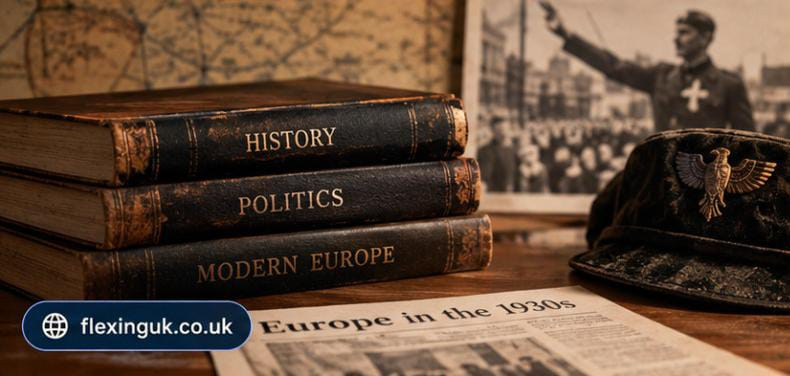
Fascism developed in early twentieth-century Europe, particularly in the political and economic instability that followed the First World War. The war had caused enormous human losses, disrupted economies, and weakened confidence in existing political institutions. Many countries faced unemployment, social unrest, and fierce disagreements about the future.
These conditions did not automatically produce fascism. However, they created circumstances in which movements promising national renewal, decisive leadership, and political order could attract supporters.
The Rise of Fascism in Italy
Modern fascism is closely associated with Benito Mussolini, who founded the Italian Fascist movement after the First World War. In 1922, Mussolini became prime minister following the March on Rome, an event that helped his movement consolidate political power.
Over the following years, his government dismantled democratic checks and established a dictatorship. Political opponents faced intimidation, independent organizations were restricted, and the regime promoted a highly nationalistic vision of Italy.
Mussolini’s government presented itself as a force capable of restoring national pride and overcoming political division. In practice, it weakened civil liberties and concentrated authority in the hands of the regime.
Italy became an important example for other authoritarian nationalist movements, although fascist movements in different countries developed their own characteristics.
The Growth of Fascism in Germany
Germany experienced another major development with the rise of Adolf Hitler and the Nazi Party. Economic hardship, political instability, resentment over the aftermath of the First World War, and the Great Depression contributed to the party’s growing support.
Hitler became chancellor in 1933. The Nazi regime rapidly destroyed democratic institutions and established a totalitarian dictatorship. It combined extreme nationalism with racist ideology, antisemitism, political repression, and territorial expansion.
Nazism is commonly understood as a form of fascism, but it had distinctive features, particularly its central emphasis on racial hierarchy and antisemitism. The Nazi state organized the persecution and mass murder of Jewish people and other targeted groups, culminating in the Holocaust.
Studying these events helps explain why the historical meaning of fascism cannot be separated from the violence and repression associated with major fascist regimes.
What Are the Main Characteristics of Fascism?
Fascism is not always identical across countries or historical periods. Scholars debate how best to define it, but several recurring characteristics help explain the ideology and its political practices.
1. Authoritarian Leadership
Fascist movements commonly promote a powerful leader who claims to embody the will, identity, or destiny of the nation. Such leaders often present themselves as uniquely capable of solving national problems.
Once in power, fascist governments typically weaken democratic institutions, undermine independent courts, restrict the press, and limit meaningful political competition.
2. Extreme Nationalism
Fascism places the nation at the center of political life. It frequently portrays national identity as threatened by internal enemies, foreign powers, or groups described as outsiders.
National pride alone does not make a movement fascist. The important distinction is the combination of extreme nationalism with authoritarian politics, political exclusion, and hostility toward democratic pluralism.
3. Suppression of Political Opposition
Fascist regimes often treat opposition as a threat to national unity rather than as a legitimate part of political life. They may ban rival parties, intimidate critics, control public institutions, and use violence against political opponents.
These methods reduce the ability of citizens to challenge government decisions or hold leaders accountable.
4. Propaganda and Control of Information
Propaganda played an important role in historical fascist regimes. Governments used newspapers, radio, public ceremonies, posters, education, and mass rallies to promote official messages.
The purpose was not simply to persuade citizens about individual policies. Propaganda also helped cultivate loyalty to leaders, glorify the state, and portray opponents as dangerous enemies.
Modern readers can study these methods to better understand how political communication may be used to weaken independent judgment.
Read more: Helonium: Meaning, Formula, Chemistry, and Why This Rare Ion Matters
5. Political Violence and Militarism
Many fascist movements celebrated military strength, discipline, sacrifice, and national struggle. Some used organized paramilitary groups to intimidate opponents and influence political events.
Under fascist governments, violence could become a tool for enforcing political obedience and pursuing territorial ambitions. This helps distinguish fascism from ordinary patriotic sentiment or peaceful political conservatism.
6. Exclusion and Persecution
Historical fascist regimes often divided society into groups considered loyal members of the nation and groups portrayed as inferior, disloyal, or threatening.
The consequences varied by country, but included discrimination, political persecution, the removal of rights, imprisonment, forced displacement, and mass violence. Nazi Germany’s racial policies led to genocide on an enormous scale.
These historical consequences are essential to understanding fascism as more than a collection of political slogans.
Fascisterne in European History
The term fascisterne can appear in discussions of several European countries. However, each country had its own political circumstances, movements, and experiences.
Italy Under Mussolini
Italy provided the earliest successful example of a fascist movement establishing a national dictatorship. The regime promoted state authority, nationalism, public spectacle, and the idea that political unity required obedience to the leader.
Its policies restricted freedom of expression and political participation. Italy later entered the Second World War as an ally of Nazi Germany, and the collapse of Mussolini’s regime became part of the wider defeat of European fascism.
Nazi Germany Under Hitler
Nazi Germany illustrates the relationship between fascist authoritarianism, racial ideology, expansionism, and systematic mass murder.
The regime eliminated political opposition, persecuted Jewish people, targeted other minority groups, and launched aggressive wars. The Holocaust resulted in the murder of six million Jews, alongside the persecution and killing of many other victims of Nazi rule.
Understanding this history is crucial when examining how extremist ideologies can become state policy and how institutions can be transformed to serve persecution.
Fascist and Nazi Movements Elsewhere
Fascist or fascist-inspired movements appeared in several European countries, including Spain, France, and Britain, although their influence, political objectives, and relationship with government differed considerably.
Spain under Francisco Franco developed an authoritarian dictatorship with important connections to fascist movements, especially during its earlier years. Historians debate the precise classification of Francoism across different periods because it combined several authoritarian and conservative traditions.
In other countries, fascist organizations sometimes remained marginal, faced strong opposition, or failed to take control of the state.
For this reason, it is inaccurate to treat every authoritarian movement as identical or assume that every European country followed the same path.
How Did Fascism Affect Ordinary People?
Political ideologies become easier to understand when their effects on everyday life are considered. Under fascist regimes, changes in government often reached far beyond parliament, elections, and political speeches.
Restrictions on Freedom
Citizens could lose the ability to criticize the government openly, publish independent newspapers, organize opposition parties, or participate freely in political activity.
People who challenged the authorities could face surveillance, dismissal, imprisonment, intimidation, or physical violence. The severity of these consequences depended on the regime and the circumstances.
Changes to Education and Public Culture
Fascist governments often sought to influence schools, youth organizations, arts, and public ceremonies. Educational materials could be revised to support official nationalism, while cultural institutions faced pressure to follow government priorities.
Such efforts helped regimes shape how younger generations understood history, citizenship, and national identity.
Discrimination and Human Suffering
In Nazi Germany and territories under Nazi control, antisemitic policies progressed from exclusion and legal discrimination to deportation and genocide. Other groups also faced persecution because of their identity, political beliefs, or circumstances.
War and territorial expansion caused further destruction, displacement, and loss of life. These experiences demonstrate why historical discussions of fascism must acknowledge the human consequences of its policies.
Fascism and Other Political Ideologies: Key Differences
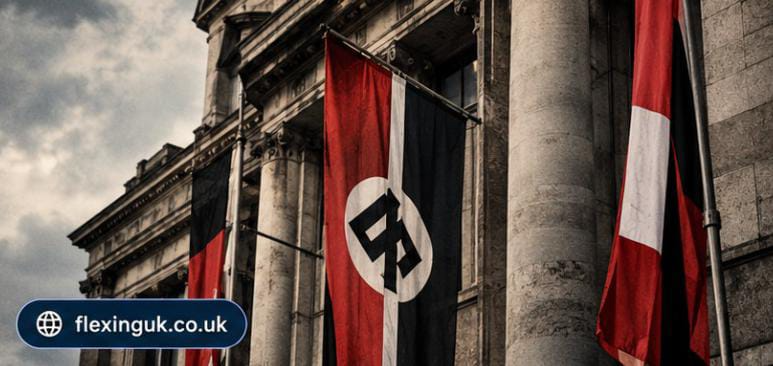
Fascism is sometimes confused with other political traditions. Although ideologies can overlap in particular circumstances, they should not be treated as interchangeable.
| Political concept | General characteristics | Important distinction |
|---|---|---|
| Fascism | Authoritarian leadership, extreme nationalism, suppression of opposition | Rejects democratic pluralism and often glorifies national struggle |
| Democracy | Political participation, elections, accountability, and civil rights | Allows competition between different political viewpoints |
| Conservatism | Emphasis on tradition, continuity, or established institutions | Does not inherently require dictatorship or political violence |
| Socialism | Broad family of ideas about social ownership, economic power, and equality | Includes democratic and authoritarian traditions with substantial differences |
| Military dictatorship | Government dominated by military authorities | May be authoritarian without sharing the full ideological features of fascism |
These descriptions are broad summaries rather than complete definitions. Political movements can combine ideas, and historians examine their institutions, policies, leadership, and historical circumstances before assigning labels.
Why Precision Matters
Calling every disliked political figure a fascist weakens the usefulness of the term. A careful assessment considers evidence of authoritarianism, extreme nationalism, political violence, suppression of opposition, and the movement’s broader ideology.
Precise language improves political debate and helps distinguish documented historical facts from emotional reactions or unsupported accusations.
How to Use the Word Fascisterne Correctly
Because fascisterne is a Danish word, its correct use depends on whether a writer is using Danish or discussing the term within English-language writing.
Grammar and Word Form
The English word fascist can function as a noun or an adjective.
As a noun, it describes a person associated with fascism. As an adjective, it describes something related to fascism.
For example:
- Noun: “The fascist supported an authoritarian political movement.”
- Adjective: “The regime introduced fascist policies.”
- Plural noun: “The fascists organized political rallies.”
In Danish, fascisterne generally refers to “the fascists,” with the definite plural form indicating a particular group or groups understood from the context.
Correct and Incorrect Examples
| Incorrect or unclear usage | Improved version | Reason |
|---|---|---|
| “Fascisterne is an English word for one fascist.” | “Fascisterne is Danish for ‘the fascists.’” | The word generally indicates a definite plural group. |
| “Fascism were a political ideology.” | “Fascism was a political ideology.” | The singular subject takes “was.” |
| “The fascists was responsible for the policy.” | “The fascists were responsible for the policy.” | A plural subject takes “were.” |
| “The government fascist controlled the newspapers.” | “The fascist government controlled the newspapers.” | The adjective belongs before the noun it modifies. |
| “All nationalists are fascists.” | “Some fascist movements promote extreme nationalism.” | The original statement makes an unsupported generalization. |
These examples show how grammar and historical accuracy work together. A sentence can be grammatically correct yet misleading if it uses a political label without sufficient evidence.
Practical Tips for Writers
When writing about fascisterne, consider the following points:
- Explain the Danish term when introducing it to an English-speaking audience.
- Use fascism when discussing the ideology and fascists when referring to people.
- Identify the historical country, movement, or period whenever possible.
- Avoid treating fascism, authoritarianism, nationalism, and conservatism as identical concepts.
- Support claims about historical events with reliable academic or primary sources.
These practices improve clarity for readers and make historical articles more useful.
Common Misunderstandings About Fascisterne
Several misconceptions can make discussions of fascism confusing. Addressing them directly helps readers separate historical evidence from oversimplified claims.
Misunderstanding 1: Fascism Is Just Another Word for Dictatorship
A dictatorship is a form of political rule in which power is concentrated and meaningful accountability is limited. Fascism is a particular political tradition that typically combines authoritarian rule with extreme nationalism, mass mobilization, and the suppression of opposition.
Although fascist regimes are generally dictatorial, not every dictatorship is fascist.
Misunderstanding 2: Every Nationalist Is a Fascist
Nationalism can take different forms, including movements for independence, self-government, or cultural preservation. Fascism is associated with a more specific combination of authoritarianism, extreme national identity, political exclusion, and hostility toward democratic pluralism.
A person’s national pride is not, by itself, evidence that the person supports fascism.
Misunderstanding 3: Fascism Ended Completely in 1945
The defeat of the major European fascist powers in the Second World War destroyed their governments, but it did not eliminate every extremist ideology or far-right movement.
Later movements have sometimes adopted ideas, symbols, or rhetoric associated with historical fascism. Whether a modern movement should be classified as fascist requires careful analysis rather than an automatic comparison.
Misunderstanding 4: The Word Has the Same Meaning in Every Context
In a historical textbook, fascisterne may refer to a particular group of people in a specific country or period. In a political argument, the term may be used more loosely or rhetorically.
Readers should examine the surrounding text to determine whether the word is being used historically, academically, or as a political accusation.
Why Understanding Fascisterne Still Matters
Learning the meaning of a historical term is useful because language shapes how people interpret the past. A word such as fascisterne can connect readers to events, political movements, and debates that cross national and linguistic boundaries.
Studying fascism also encourages a closer examination of democratic institutions, independent journalism, political participation, and the protection of minority rights. History shows that democratic systems can be weakened when political leaders undermine accountability, portray opponents as enemies, and concentrate power.
At the same time, responsible historical analysis requires evidence, context, and careful distinctions. Not every political disagreement signals fascism, and not every authoritarian government follows the same ideology.
For students, researchers, and general readers, the most useful approach is to combine accurate translation with a sound understanding of historical developments. This makes it easier to interpret articles, books, and political discussions without confusing different concepts.
Frequently Asked Questions About Fascisterne
1. What does fascisterne mean in English?
Fascisterne is Danish and generally translates as “the fascists.” It refers to people associated with fascism, with the definite plural form indicating a particular group in context.
2. Is fascisterne a Danish word?
Yes. It is a Danish word related to fascist. The ending indicates a definite plural form, which is why “the fascists” is the usual English translation.
3. What is fascism in simple terms?
Fascism is an authoritarian political ideology commonly associated with extreme nationalism, powerful leadership, the suppression of political opposition, and the rejection of democratic pluralism. Historical fascist regimes also used propaganda and political violence.
4. Who were the most famous historical fascists?
Benito Mussolini in Italy and Adolf Hitler in Germany are the best-known leaders associated with historical fascism. Their regimes differed in important ways, particularly regarding Nazi Germany’s central emphasis on racial ideology and antisemitism.
5. What caused fascism to rise in Europe?
The aftermath of the First World War, political instability, economic hardship, social conflict, and fear of revolutionary change contributed to fascism’s growth. These conditions varied between countries and do not, by themselves, explain why every individual supported a fascist movement.
6. Is fascism the same as Nazism?
No. Nazism is generally classified as a form of fascism, but it has distinctive characteristics. Nazi ideology placed exceptional emphasis on antisemitism, racial hierarchy, territorial expansion, and the pursuit of a racially defined national community.
7. Can fascisterne be used in modern political discussions?
Yes, but writers should use the term carefully. When applying it to a contemporary movement, it is important to explain the relevant characteristics and provide evidence instead of using the word simply as an insult.
8. How can I learn more about fascism?
Start with reputable history books, academic encyclopedias, museum resources, and educational materials about twentieth-century Europe. Comparing sources can help distinguish established historical facts from political interpretations.
Conclusion: Understanding Fascisterne Through Language and History
The term fascisterne generally means “the fascists” in Danish. Understanding it involves recognizing the difference between a political ideology, the people who support it, and the historical regimes associated with it.
Fascism emerged as a major political force in twentieth-century Europe, particularly in Italy and Germany. Its authoritarian leadership, extreme nationalism, suppression of opposition, and, in major historical cases, systematic persecution and mass violence had lasting consequences.
For more: Visit: FlexingUK